Multidisciplinary Assessment Team

The purpose of the multidisciplinary assessment is to determine the specific areas where a child may require support.

The first step will be for your child to see a paediatrician or, sometimes, a child psychiatrist who will advise on those areas where your child would benefit from in-depth assessment and subsequent diagnosis. This will be followed by recommendations on therapies and emotional support, as appropriate.

Paediatricians

The paediatricians will advise on those areas where your child would benefit from in-depth assessment and subsequent diagnosis, by our team of experts. This will be followed by recommendations on therapies and educational scaffolding, as appropriate.
When a child is presenting with traits that may suggest autism, specialist diagnostic testing may be recommended (see Autism Diagnostic Assessment Service). This is generally conducted by two clinicians, in order to validate the diagnosis.

Psychiatry

The psychiatric team provides a child and adolescent psychiatric assessment of children and families. This focuses on looking at issues of diagnosis, treatment and management. If appropriate, therapeutic support or follow up are offered as part of the service.

It is particularly important to have a psychiatric view of a child, especially when looking at possible diagnosis of Autism, ADHD and depression; in these cases, medication may be necessary.

Cognitive Skills

The psychometric cognitive skills assessments are carried out by a team of clinical, educational and neuropsychologists.
The role of the Psychologist is to assess a child’s cognitive ability, using internationally recognised tests of intellectual ability and academic achievement, such as the Wechsler Scales. The assessments look at thinking skills to discover how children learn and to identify what might be impacting on learning. They can establish a level of intellectual ability and identify whether specific learning difficulties such as dyslexia, dyscalculia, processing or memory problems are present.A detailed report of the assessment findings is provided which includes recommendations that are tailored to the child or young person’s specific needs.

Counselling & Psychotherapy

The psycho-emotional assessment is undertaken by a team of child & adolescent psychotherapists, and family & systemic therapists.

The role of the child & adolescent psychotherapist is to undertake a qualitative assessment of the patient’s state of mind.

A developmental history is taken in order to evaluate current difficulties and make a prognosis for future development. The clinician will spend time observing first-hand, how a child functions in a semi-structured setting. The clinician is also trained to listen closely and observe how the child plays as part of the overall assessment. A description of the child’s current emotional state and areas of emotional strengths and vulnerabilities will be provided; these factors are key to a child’s ability to maintain healthy relationships and/or access education. Where appropriate, a psychotherapist will make recommendations for treatment that may include individual psychotherapy, family-systemic therapy or supportive parent work.

Systematic/Family Therapy

Therapists providing family & systemic support, observe family patterns, interactions and relationships, as these may contribute to the patient’s difficulties.

Speech and Language Therapy

Patients are seen for evaluation and advice regarding:

• Speech/Language Delay
• Speech-sound production difficulties
• Developmental Language Disorder
• Autism Spectrum Disorder (ASD)
• Dysfluency (Stammering / Stuttering / Cluttering)
• Disorders of social communication
• Higher-order language difficulty
• Difficulties with oral and written comprehension or expression
• Selective Mutism

Follow-up treatment is offered at the practice whenever possible, in conjunction with a home-based or school-based programme. In some circumstances, an onward referral may be recommended.
The team is always happy to discuss parental concerns.

Physiotherapy/Occupational Therapy

Physiotherapy and occupational therapy services address concerns relating to:

• Motor skills
• Visual perception
• Sensory processing skills
• Attention control
• Handwriting
• Self -care skills ( dressing, using cutlery, toileting)
• Organisational skills

Following an assessment, the physiotherapist/occupational therapists use carefully selected activities to help children develop the motor, sensory, perceptual and organisational skills they need to be independent in everyday activities of self-care, play and schoolwork.

Make an Enquiry

Complete our short enquiry form and one of our staff will get back to you as soon as possible

Our Specialists

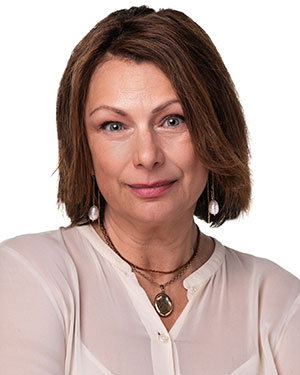
Julia Avnon

Clinical Psychologist

Dr Roger Kennedy

CONSULTANT CHILD & ADOLESCENT PSYCHIATRIST AND PSYCHOANALYST

Julia Avnon

Position: Clinical Psychologist
Categories: *ADHD, *Autism, *Family Therapy, *Help with parenting, *Multidisciplinary Assessments, Psychologists

Julia Avnon is an experienced psychologist with over 20 years’ clinical experience in the assessment and treatment of children, young people and adults with neurodevelopmental, learning and mental health needs. Her areas of particular expertise include autism, ADHD, specific learning difficulties, and emotional difficulties including anxiety, depression and OCD.

She trained and worked across a range of specialist NHS services, including Great Ormond Street Hospital, University College London Hospital CAMHS, community mental health services, and specialist child and adolescent learning disability services. This work included supporting children and young people with complex psychological, developmental, medical and educational needs. She has extensive training in cognitive behavioural therapy, systemic approaches and neuropsychology, and has also worked within education, collaborating closely with schools and local authority professionals.

Alongside her clinical work, she has extensive experience in teaching, training and clinical supervision. She has taught and supervised mental health, education and medical professionals and has held senior teaching roles at the Anna Freud Centre, University College of London and on specialist supervision programmes.

She offers:

  • Autism diagnostic assessments for children, young people and adults, conducted in accordance with NICE guidance. My approach goes beyond determining whether diagnostic criteria are met: assessments aim to develop a detailed understanding of the person’s individual strengths, differences and areas of need, consider possible co-occurring or alternative explanations, and provide practical, individually tailored recommendations for home, education, employment and wider life.
  • Comprehensive cognitive and neuropsychological assessments for children, young people and adults, including assessment of specific learning difficulties such as dyslexia. These are designed to identify patterns of strengths and difficulties and to inform appropriate educational, therapeutic and workplace support.
  • Individual psychological therapy for adults, drawing primarily on CBT and integrative approaches.
  • Parent consultation and support, particularly in relation to neurodevelopmental and emotional needs.
  • School consultation, including advice regarding learning, emotional wellbeing and neurodevelopmental needs.
  • Clinical supervision for psychologists and other professionals, including medical professionals working with autistic and neurodivergent people. My supervision combines structured, research-informed models of reflective practice with more than 20 years’ experience working in highly specialised clinical and educational settings.

    Dr Roger Kennedy

    Position: CONSULTANT CHILD & ADOLESCENT PSYCHIATRIST AND PSYCHOANALYST
    Categories: *ADD, *ADHD, *Autism, *Multidisciplinary Assessments, *School and Education, *Trauma Therapy, Directors, Psychiatrists

    Dr Roger Kennedy worked as a Consultant Family Psychiatrist in the NHS at the Cassel Hospital Richmond, for 29 years and was an Honorary Senior Lecturer in Psychiatry at Imperial College, London. He is trained as a Child Psychiatrist and a Medical Psychotherapist.

    He has extensive experience of providing courts and social services with expert opinion on multi-problem families as well as in private law cases, though he no longer appears in court. He also has considerable experience in assessing compensation cases. He is acknowledged as a leading expert in the field and has published several books and many papers. He sees adolescents, couples and families for therapeutic work, and offers assessments for children and parents, for emotional and behavioural problems, and does screening assessments for autism spectrum disorder and ADHD.

    Dr Kennedy is also a Training Psychoanalyst of the British Psychoanalytical Society and was their President 2004-6. He has an extensive psychoanalytic and psychotherapy practice for adults, has many years’ experience of teaching and training in the therapy field, and is often involved in presenting at conferences both in the UK and abroad.

      Kennedy, R. (2014) The Psychic Home. London and New York: Routledge

      Kennedy, R. (2019) Tolerating Strangers in Intolerant Times. London and New York: Routledge.

      Kennedy, R. (2020) The Power of Music. London: Phoenix Books